Buying Guide・2021-07-29
How to Choose the Right Conference System? Understand the Definition, Technology, Trends, and Application Scenarios in One Article (Part 2)
Industry Insights: Classification of Conference Microphone Systems by Technology Category
..., divided into "analog" and "digital" types: Analog Conference System:
Audio is transmitted via analog signals. Due to the functional limitations of analog signals, although these conference systems are moderately priced, they are limited in terms of integration and additional features.
Digital Conference System:
Built-in digital signal processing (DSP) chip, featuring clear sound quality, extensive functions, and infinite possibilities for integration with control systems, making it the mainstream of current conference microphone systems.
In type category
systems, divided into wired and wireless types. Both are widely used, and their advantages and disadvantages are listed below for reference: Category | Technology | Advantages | Disadvantages | Applicable Scenarios | Wired Conference System
Analog and digital technologies, with digital conference systems currently being the mainstream
Resistant to interference from other wireless signals, excellent quality stability, easy installation, extremely low equipment maintenance costs, fixed wiring installation, cannot be moved frequently
Shielded cables must be used to prevent interference
Wireless conference systems for conference venues that are set up once and not moved frequently
Technologies like Infrared and Wi-Fi (infrared cannot penetrate walls and requires maintaining a clear line of sight between transmitters and receivers) offer excellent mobility and can be set up according to usage scenarios to keep conference tables neat. However, they require charging before and after use, as well as storage and repeated installation, which can affect equipment lifespan and make them susceptible to on-site wireless signal interference.
Suitable for multi-purpose conference venues that require frequent layout changes. In terms of sound pickup technology, microphones are divided into directional and omnidirectional: Directional microphones:
The pickup pattern mainly captures sound from the front while rejecting sound from the rear. It is an excellent choice for clearly picking up sound when amplifying a single voice or in spaces with poor acoustics. Currently, the most mainstream directional microphone is called the "cardioid directional microphone," which has a heart-shaped pickup pattern and is highly suitable for audio pickup in conference applications.
Omnidirectional Microphone:
Suitable for picking up all sounds in a space. However, this also means it will pick up background noise. If there is loud wind or cooling system noise, the audio pickup effect will be affected.
The following are common designs for conference microphones, which can be selected and matched according to the scenario:
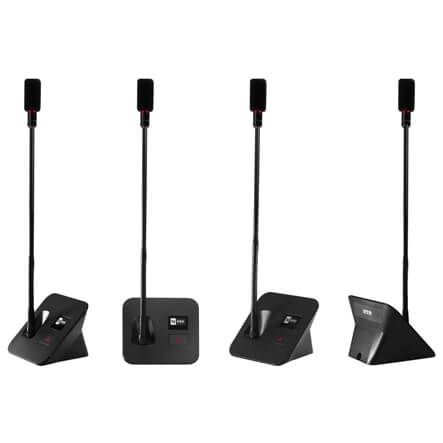
Table-top Microphone:
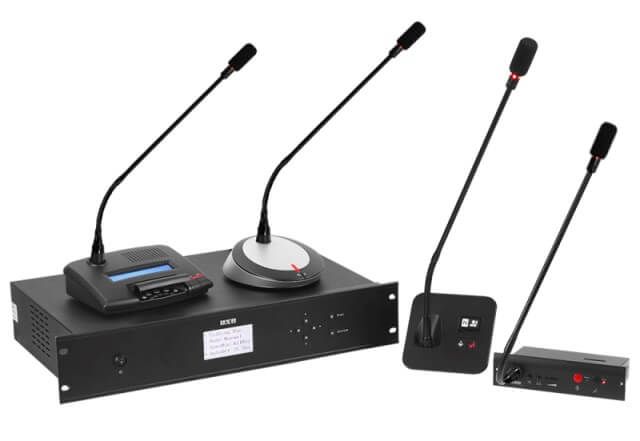
Highly suitable for multi-participant meeting scenarios. Placed on the table to capture the speaker's voice, it achieves excellent audio pickup when paired with a cardioid microphone.
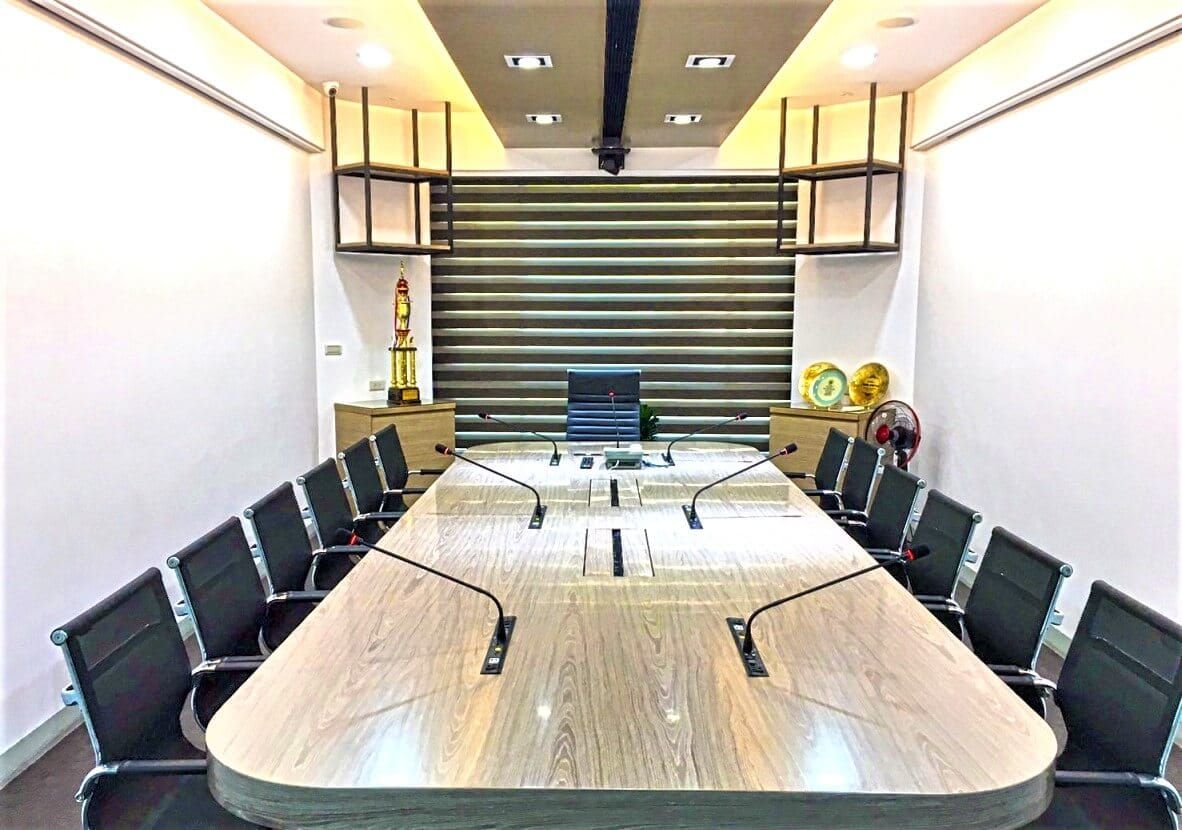
2. Flush-mounted Microphones:
The basic functions are the same as the desktop microphone, but for overall aesthetic design, the panel is flush-mounted into the tabletop, blending smoothly with the surface.
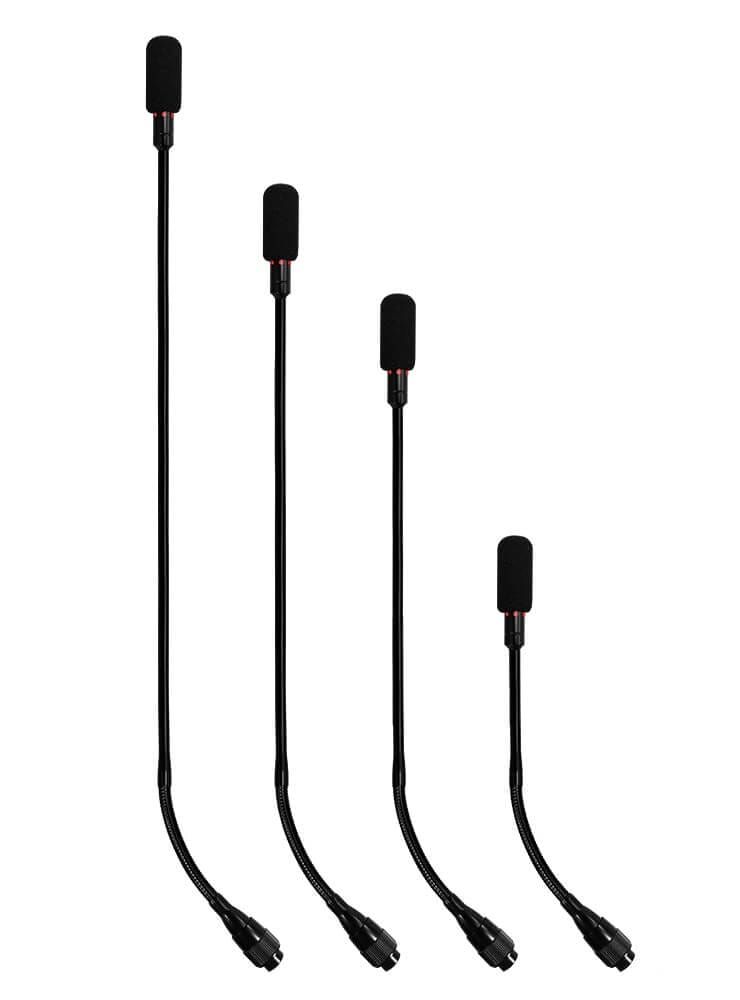
3. Gooseneck Mics:
Usually used on desktops and lecterns or connected to tabletop microphones. Featuring an adjustable, slender microphone neck, it captures audio and blocks background noise. Such microphones are mainly used in auditoriums or rostrums, ensuring that the speaker's voice is clearly captured.
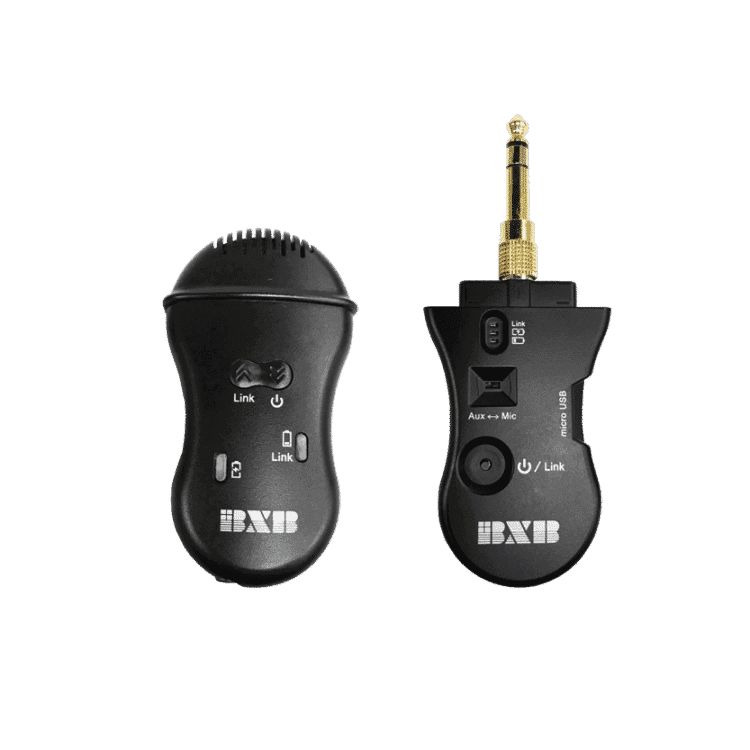
4. Wearable Mics:
Clip the wearable microphone onto the collar or use a headset to facilitate speaking while standing or walking, suitable for teaching presentations or meeting hosts (Learn More
)。
5. Armchair Handheld Mics:
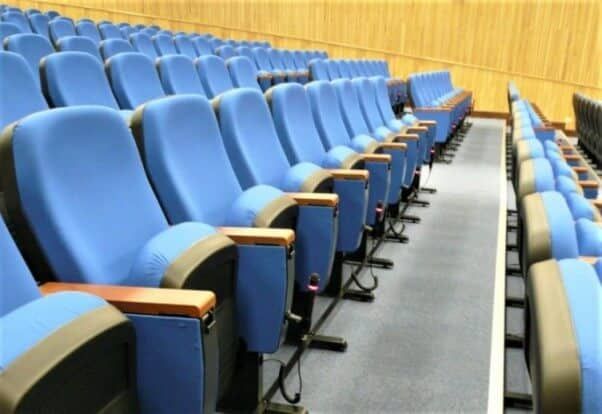
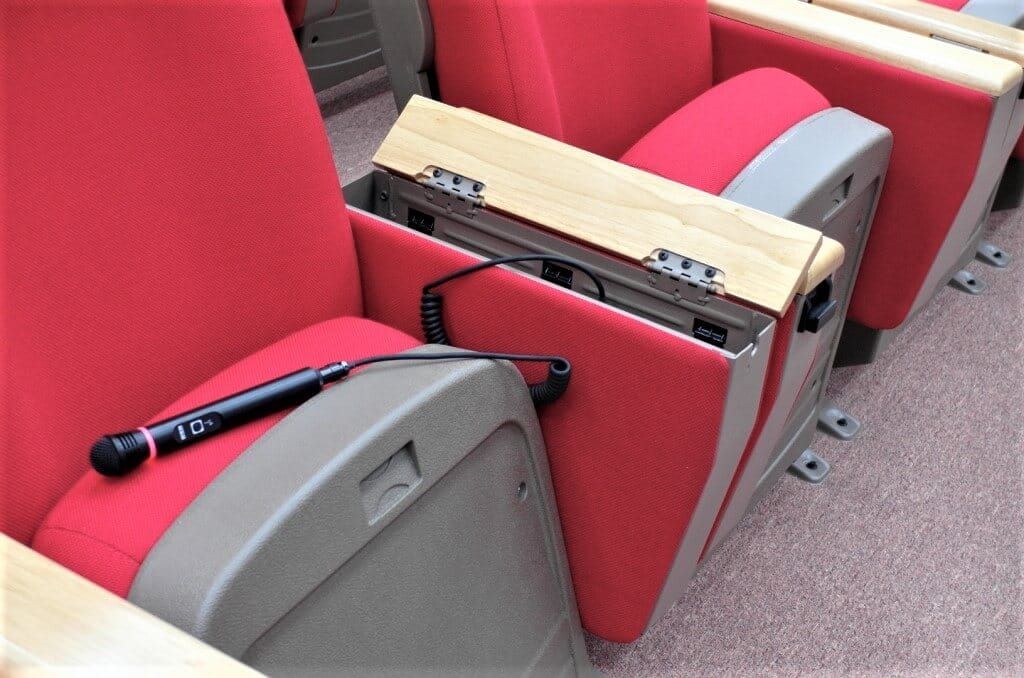
Lecture halls and large auditoriums are usually equipped with armchairs. Handheld microphones can be built into the armrests for easy speaking, reducing the labor cost of passing wireless microphones and minimizing disruptions to the flow of the meeting.
How to Choose and Purchase a Conference Microphone System?
The following are practical suggestions for purchasing conference microphones: Location and Space:
This is the primary consideration when evaluating a conference microphone system. The venue and space of the event will determine whether you need wired or wireless microphones.
Usage scenarios:
A good system planning prioritizes scenario design. It is better to think about the usage scenario first, and then choose the appropriate products and equipment. The above four types of conference microphones can be used with different conference microphones depending on the system design.
Number of participants:
It is necessary to know the number of participants in the meeting to confirm the total number of chairman and delegate microphone units. Most Central Control Units (CCUs) can manage hundreds of microphone units. Taking BXB's
FCS-6300 Digital Conference System
as an example, up to 1009 conference units can be connected, meeting the demands of international conferences.
Audio quality:
Older analog audio signals are more difficult to control, resulting in inconsistent quality. However, most systems today have gone digital to improve sound quality and provide advanced signal processing and functional options. At the same time, integration with sound reinforcement systems such as speakers and amplifiers is required to ensure overall sound quality.
Exterior design:
A suitable conference microphone design not only offers overall visual aesthetics but also hides many details where the devil lies. For example,
Will the indicator light on the gooseneck microphone distract the speaker's vision when it is lit?
?
Whether the base design of the desktop microphone is stable
? Desktop footprint size
?
Whether the tabletop needs to be damaged for fixed installation during setup, and other such details, are all critical factors determining the success of a conference microphone system. We highly recommend BXB's conference microphones, whose outstanding design has received numerous accolades over the years, including the German iF Design Award, the Japanese Good Design Award, and the Taiwan Excellence Award.
Advanced Applications of Conference Microphone Systems
As conference microphone systems become more integrated, they offer more functions. The following items should also be considered when choosing: voting and parliamentary procedure functions:
Voting mechanisms, historical vote tracking, roll-call and secret voting, etc., support more complex voting procedures.
Recording function:
In addition to audio recording, there are also video recordings of the meeting process. Whether the system equipment has built-in digital audio/video recording functions to preserve meeting records for future review and distribution is crucial. Recently, many major meetings, such as
National policy or municipal meetings use video recording and live streaming to simultaneously record and broadcast to the public. BXB provides recording and streaming solutions
, which can be highly integrated with conference microphone systems.
Video conferencing:
In recent years, network-based video conferencing has become prevalent, and integrating conference microphone systems with video conferencing cameras is a highly popular demand. BXB also offers a video conferencing system suitable for small and medium-sized meetings that can create an international conference hall-level meeting experience.
, which can also provide lecture capture solutions for such needs, highly integrated with the conference microphone system.
If you haven't read the previous article, please click here to read it
How to Choose a Suitable Conference System? Understand the Definition, Technology, Trends, and Application Scenarios of Conference Systems in One Article (Part 1). If you have more questions regarding conference systems
questions, wish to consult on customized solutions for your meeting needs, or want to learn more about BXB conference microphone system quotes, please leave your contact information and requirements, and we will provide you with professional services immediately.
。