Buying Guide・2020-12-11
High-end speakers are installed in the conference room, but the audio quality is still poor. What should you do?
Industry Insights
Sound reinforcement systems play a key role in transmitting information during communication, which can make or break a meeting. In a conference room, the installation of the sound reinforcement system is the most critical part of AV engineering planning. In many cases, even though some conference rooms are equipped with high-end and expensive speakers, the overall sound quality in the room is extremely poor. Why is that? Pain points of poor loudspeaker installation.
In project site design and planning, many people often face dilemmas due to environmental and spatial constraints: where is the best place to install the "loudspeakers (speakers)" that transmit sound? You might think this is not a major issue—just mount them on an empty pillar or wall, as long as sound comes out when speaking into the microphone. Of course, sound will come out regardless of where the speakers are installed. However, have you ever wondered why the sound quality at some sites is not clear, the volume varies depending on where you sit, or acoustic feedback issues frequently occur? All of these phenomena are closely related to the dispersion angle and coverage area of the speakers.
To improve sound issues, the environment is of course very important. No matter how good a speaker's structure is, without an ideal operating environment, no audio system can perform to its full potential. However, this article is not asking everyone to build acoustic environments like recording studios or concert halls at their project sites. Instead, it mainly aims to help everyone improve speaker installation methods within their existing environments, avoiding unnecessary reflections and diffused audio, thereby enhancing the overall sound field quality of the conference system.
The details of speaker installation determine everything about the sound
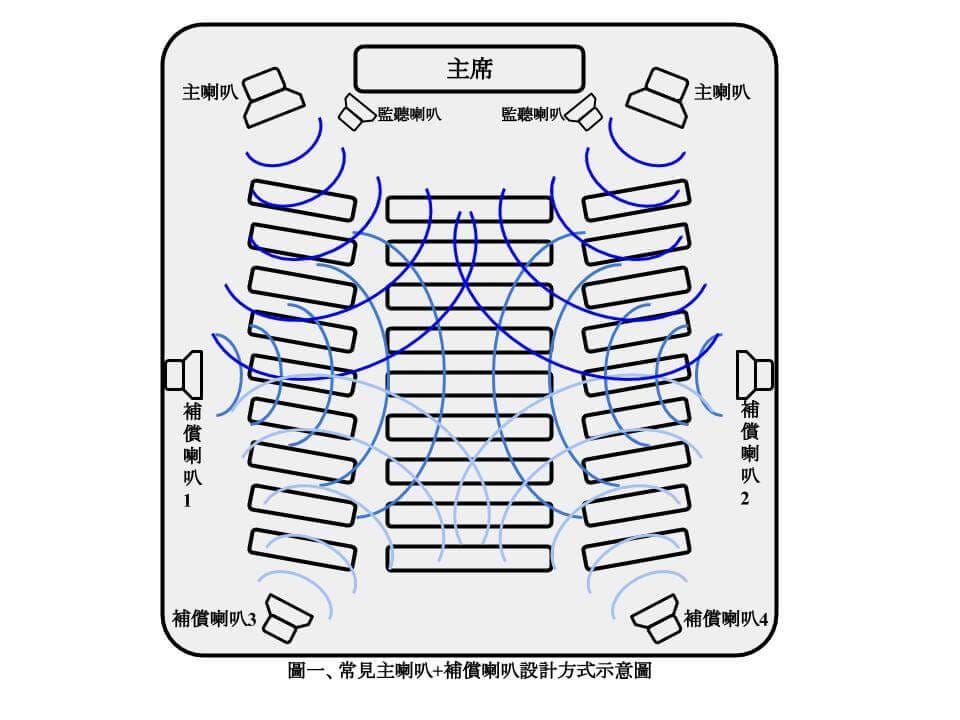
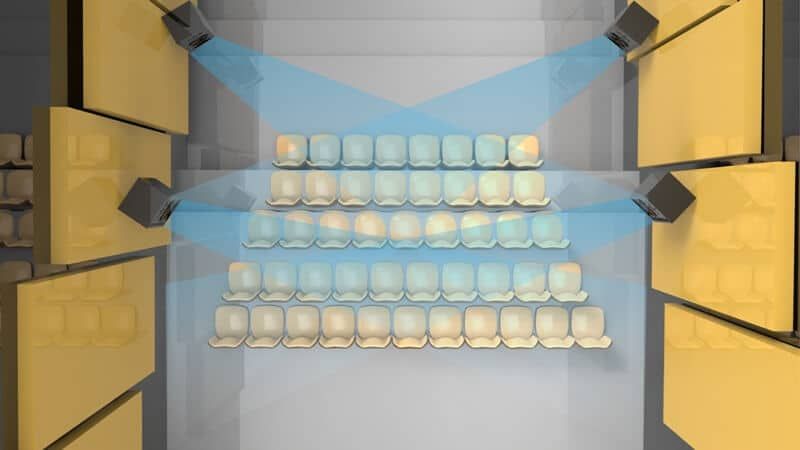
Most conference room design layouts fall into two main categories: 1. Independent rostrum-style conference halls; 2. Round-table conference halls. The first type usually has a larger indoor space, with a separate rostrum and audience section, and some venues may even add a presentation lectern. Many project sites will use front (FRONT) speakers and rear (Rear) speakers, plus side-fill speakers (Side Fill) suspended on both side walls,
The method to compensate for insufficient sound in the middle. As shown in Figure 1,
While this design approach seems to cover the seating area, it is a multi-channel home theater method. In a conference room environment, the biggest issue is the uniformity of the sound field. Due to factors such as uneven frequency response curve distribution and speaker directivity, the sound field presented by the speakers will differ from reality. The larger the space, the poorer the uniformity. Because uneven layout also limits the gain of sound transmission, the PA system has to be turned up louder and louder, resulting in excessive sound pressure for seats closer to the speakers, while middle seats receive sound from too many directions, which actually reduces speech intelligibility.
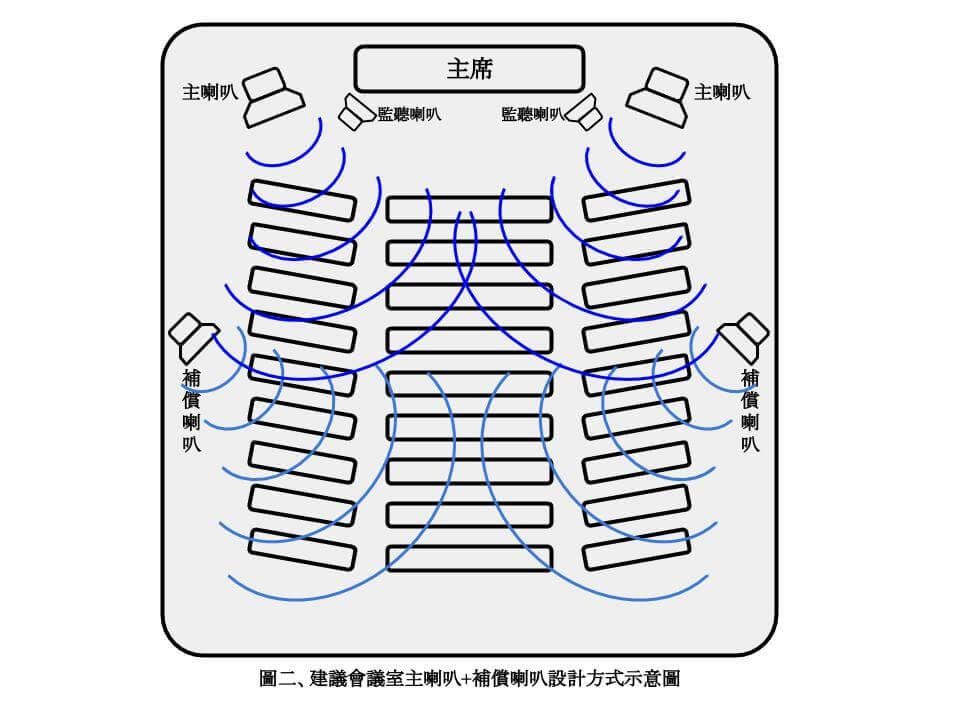
In Figure 1, the fill speakers 3 and 4 are redundant. Even if the conference room is long and narrow, you only need to add a pair of speakers and shift them toward the rear field in the same layout, as shown in Figure 2. Of course, if the budget allows, you can also choose line array column speakers,
By arranging multiple speakers in a linear or symmetrical manner, the sound energy is transmitted, so the sound people hear is no longer a single point but a plane, allowing them to clearly perceive the depth and width of the sound.
。
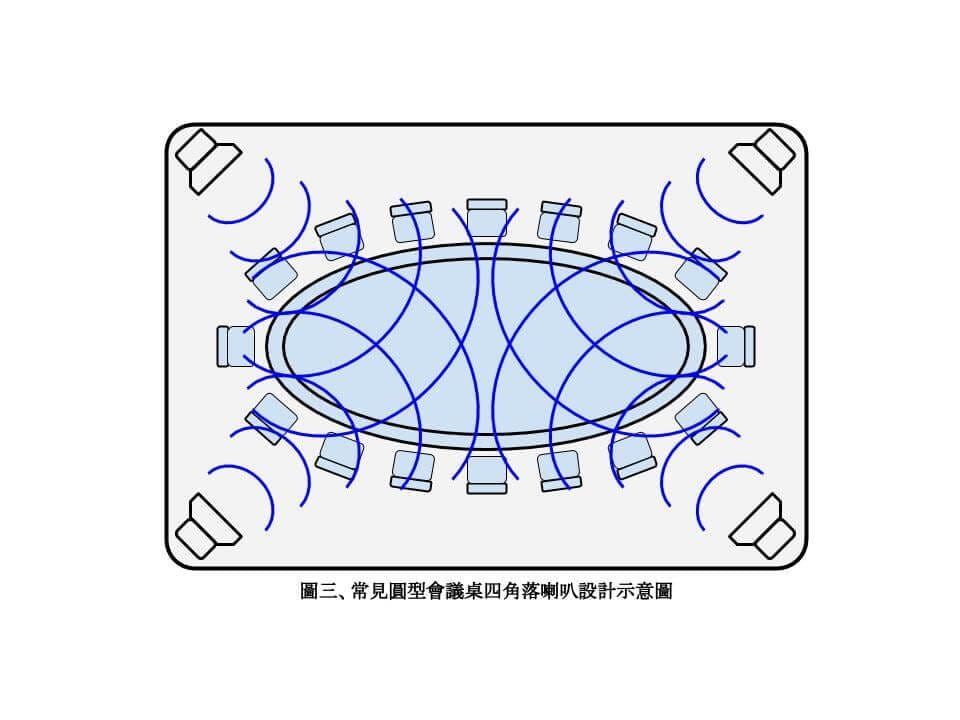
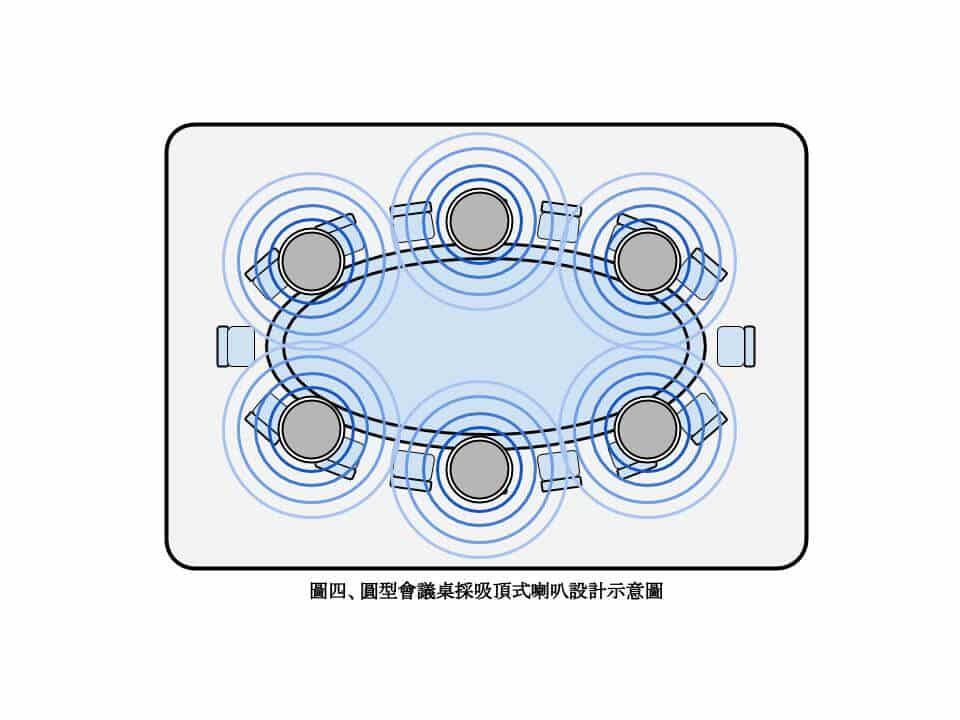
There is also a type of conference room with a round-table environment as shown in Figure 3. For this, a four-corner surrounding architecture is even less recommended, as it is difficult to achieve sufficient sound transmission effects, and in severe cases, feedback howling may occur (
feedback) phenomenon, and even using sound-absorbing materials or feedback suppression is of no avail. For this type of environment, ceiling speakers can be used instead (subject to ceiling installation permission), as shown in Figure 4, installed in an overlapping manner that minimizes the coverage area of the ceiling speakers' radiation angle.
Details to consider when planning audiovisual engineering
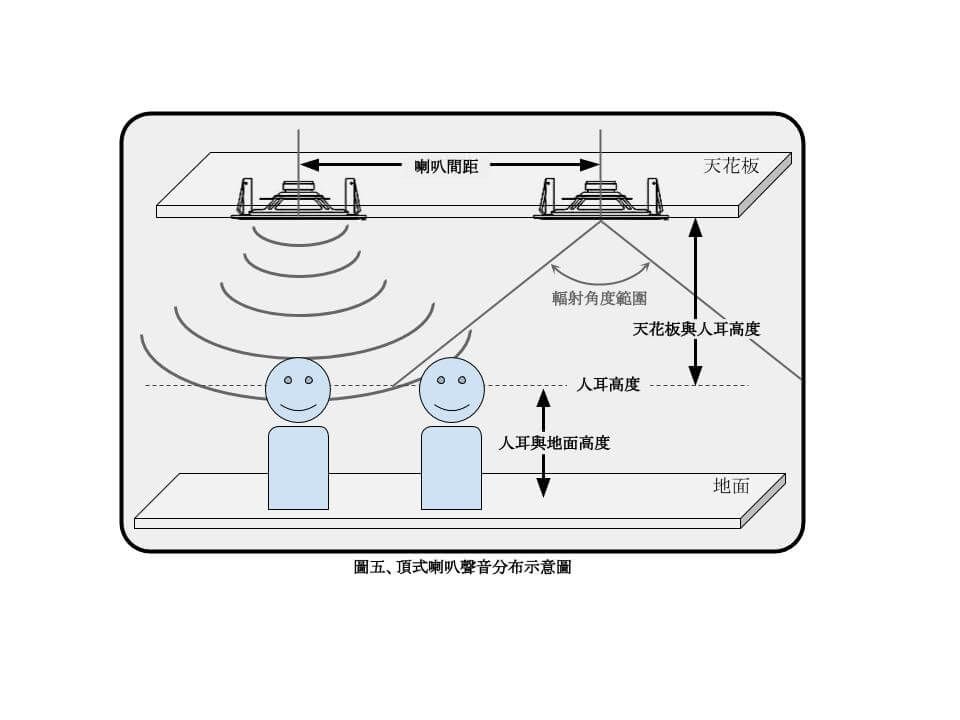
There are still some considerations to keep in mind with this type of solution. As shown in Figure 5, the height from the ceiling to the human ear in the on-site environment and the effective radiation angle of the ceiling speaker (Note 1); avoid resonance, vibration, and echo from ceiling materials; place speakers as close to the top of people's heads as possible, avoiding hard horizontal desktops, etc. Basically, such layouts follow the principle of symmetrical placement, as symmetrical distribution is beneficial to the uniformity of the sound field (if the ceiling method is used and aesthetics must also be considered, it is recommended to consult a professional acoustic designer for relevant design guidance).
Note 1: The dispersion angle is the angle at which sound waves emitted by a speaker travel. For example, if a speaker's dispersion angle is 100 degrees, centered on the front midpoint of the speaker driver, the range within the 100-degree angle to the left and right provides the most effective listening experience. Exceeding this angle range may result in lower volume or other issues.
The primary task of conference system microphones and sound reinforcement equipment is to allow the audience to clearly hear the speaker's content, which is also BXB's "uncompromising" principle. However, the root causes of issues like unclear sound still stem from spatial physical distribution and acoustic wave propagation characteristics. This is mainly because the structure and decoration of general conference rooms are unfavorable to acoustic characteristics (except for projects decorated by acoustic designers). In most projects, the layout and decoration plans have already been finalized, or even completed, before we are involved, making it difficult to control the acoustic environment of the conference room. Therefore, what we should do is change the installation methods and avoid incorrect practices as much as possible, so that the products can perform effectively.
#ConferenceRoomSpeakers #SoundReinforcementSystem #WhatIsALoudspeaker #LoudspeakerSpeaker #AudioVisualEngineering #SoundField #SoundFieldTuning #AudioSystem #Amplifier #PA