
Buying Guide・2025-03-03
Upgrading from AVIoT to AIoT, fully unleashing the new potential of smart AV management.
Industry Insights
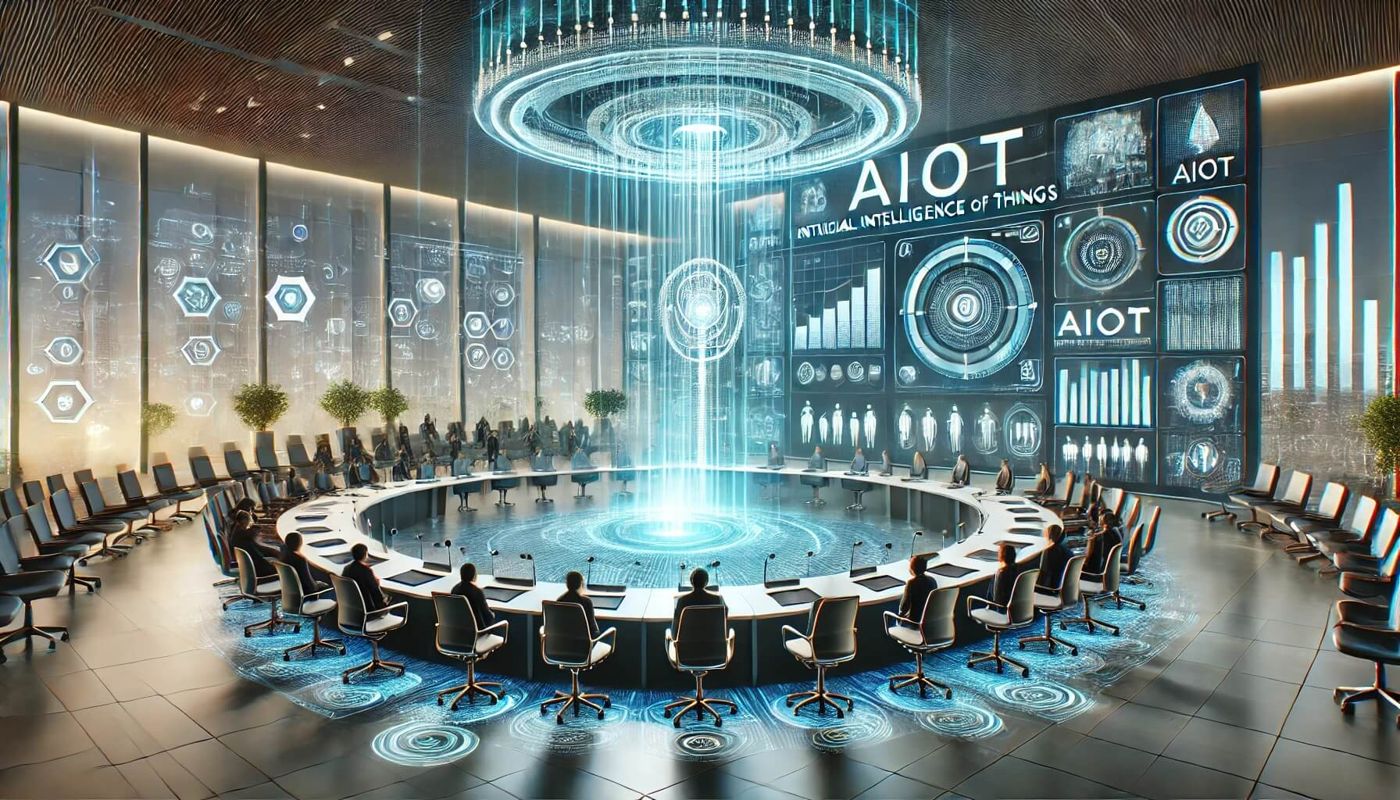
From the perspective of global market development trends, digitization and intelligence are accelerating. AIoT (Artificial Intelligence of Things) technology has become one of the key driving forces for corporate digital transformation. Solutions such as smart conference rooms, smart classrooms, and smart offices are receiving widespread attention.
According to market trends, 70% of European and American enterprises have actively adopted AIoT technology.
, indicating that it has become a mainstream trend, and enterprises are rapidly catching up with this wave of digital transformation.
MarketsandMarkets predicts that by 2030, the AIoT application market size will exceed USD 79.13 billion
, further reflecting the global emphasis and growth potential for smart AV, edge computing, and IoT solutions.
AIoT technology combines the automated decision-making capabilities of AI with the real-time connectivity of IoT, empowering enterprises in real-time data analysis, automated management, and environmental control systems, helping enterprises transition from traditional management to highly intelligent management models. As a brand focusing on innovative solutions for smart conference rooms and smart classrooms, BXB Electronics deeply understands the importance of smart AV and IoT technologies in enhancing corporate competitiveness during the wave of 'digital transformation.'
According to Gartner's research report, implementing AIoT technology can not only reduce operating costs by 30% but also improve asset utilization efficiency by 40%.
, which is undoubtedly a major benefit for enterprises pursuing efficiency and cost control.
In the past, BXB successfully promoted the digital application of smart meeting rooms and classrooms using AVIoT (Audio-Visual Internet of Things) technology. However, with increasingly diverse market demands and intensifying challenges in smart collaboration, BXB resolutely transitioned from AVIoT to AIoT. By leveraging more powerful intelligent analysis and automation capabilities, BXB continues to optimize audio, video, and environmental control systems, comprehensively enhancing management efficiency for enterprises in smart meetings, smart teaching, and smart offices.
In addition,
According to the Frost & Sullivan report, AIoT conference systems can increase interactivity by 50% and reduce meeting time by 25%
, these data further prove that whether pursuing smart audio-visual solutions or comprehensive intelligent management, AIoT is an important tool for corporate digital transformation. As the demand for smart management continues to rise, BXB will continue to focus on the in-depth application of AIoT technology, helping enterprises stand out in fields such as smart offices, smart meeting rooms, and smart classrooms, seize market opportunities, and maintain a leading technological position in the global smart management field.
Advantages and Limitations of AVIoT
AVIoT (Audio-Visual Internet of Things) technology has demonstrated outstanding application value in fields such as smart conference rooms and smart classrooms. Its advantage lies in its ability to integrate audio-visual equipment with network systems, providing high-quality audio-visual effects and stable digital management. For example, in a conference environment, AVIoT can synchronously control audio, cameras, and projection equipment via the network, enhancing the professionalism and interactivity of the conference experience. However, with the diversification of market demands and intelligent development, AVIoT also faces several limitations:
Insufficient Intelligent Data Processing: Although AVIoT can collect audio and video data, it lacks advanced data analysis and intelligent processing functions, making it unable to dynamically adjust equipment settings based on the environment.
Limited Automation Applications: AVIoT mainly relies on manual control, making it difficult to achieve fully automated venue management, with performance particularly limited in smart scenarios that require dynamic adjustments.
Low collaboration among smart devices: AVIoT lacks cross-device intelligent collaboration capabilities, resulting in the inability to synchronize adjustments across multiple devices in real time, reducing the flexibility and intelligence of the overall system.
How does AIoT solve AVIoT pain points?
BXB Electronics is actively exploring how to utilize AIoT technology to break through existing limitations in AVIoT (Audio-Video Internet of Things) applications, combining the intelligent decision-making capabilities of artificial intelligence with the high-efficiency connectivity of the Internet of Things to create smarter venue management solutions.
Data-driven smart decision-making: AIoT has demonstrated immense potential in field applications. For example, through advanced AI algorithms, real-time analysis of AV data allows the system to automatically adjust parameters based on actual on-site needs. In smart conference rooms, AIoT technology can automatically optimize microphone and audio settings based on the number of participants and sound distribution to achieve optimal sound coverage. Taking the BXB tabletop conference microphone as an example, it can precisely identify human voices, avoid surrounding noise interference, and automatically turn off after speaking, perfectly meeting the needs of automated meetings. Furthermore, image recognition technology can accurately identify the speaker's position. Paired with the BXB VT-725 video tracking controller, it can automatically adjust the camera's angle and focal length, switching screen layouts based on the speaker's movements. This simplifies tedious manual operations and ensures that every participant can see the speaker clearly, thereby significantly enhancing the remote collaboration experience.
High Automation and Real-time Adaptation: Leveraging the automation potential of AIoT, this technology can automatically configure and optimize equipment in conference and educational venues, significantly reducing manual intervention. For example, in a smart classroom, AIoT can automatically switch display modes and audio settings based on different course types, thereby enhancing teaching efficiency and venue adaptability. Meanwhile, video processing technology can automatically adjust the projection aspect ratio according to the course content, or utilize AI tracking cameras to adjust the video feed of teachers and students in real time to ensure optimal learning outcomes. Paired with the VT-725 video tracking controller integrated with PTZ cameras, the system can automatically track human figures, keeping the speaker centered at all times, and automatically split the screen during dual-speaker discussions to provide a smooth and clear visual experience.
Flexibly expand to a wider range of application scenarios: such as smart offices and smart campuses, and are expected to seamlessly integrate existing IT and OT equipment, avoiding duplicate investment and upgrade costs. In terms of video applications, the AIoT system can combine video analysis technology to perform behavior recognition through visual data, such as automatically detecting attendance, analyzing attendee attentiveness, and even generating real-time subtitles and notes based on the speech content. Meanwhile, BXB is continuously researching and developing technology to automatically generate meeting transcripts from microphone audio, which can be integrated with AI in the future to automatically organize and generate systematic meeting notes.
Edge Computing Technology Enhances Response Speed: To further improve site management efficiency, reduce reliance on the cloud, and minimize latency, BXB is actively exploring the application potential of edge computing technology. Moving data processing to local servers closer to the devices can significantly shorten response times and data transmission latency, thereby enhancing real-time interaction. In video applications, edge computing accelerates image recognition and processing, such as detecting the speaker in real time and automatically adjusting camera focus, reducing video latency, and improving video conferencing smoothness. Through the BXB VDM Network Distributed Multimedia Publishing Solution, which utilizes multi-point matrix encoders and decoders to handle video presentation, the advantages of edge computing in data processing are fully demonstrated.
Moving from AVIoT to AIoT is an important direction in the evolution of smart management technology. BXB continues to explore how to combine AI's data analysis capabilities with IoT's device connectivity advantages through AIoT technology, aiming to overcome the challenges of AVIoT in data processing, automation, and scalability, and to assist enterprises in moving towards smarter venue management and decision optimization. With the continuous growth in market demand for intelligent management, AIoT will become one of the core technologies for future smart space applications.
How do AI and IoT collaborate?
AIoT is an intelligent solution that combines Artificial Intelligence (AI) and the Internet of Things (IoT). AIoT leverages AI's deep learning and data analysis capabilities to empower IoT devices, enhancing the possibilities for real-time decision-making and automated management. The core of IoT lies in collecting and transmitting data through the connection of sensors and devices. However, data transmission alone is no longer sufficient to meet modern smart management needs. Therefore, AI is introduced to process massive amounts of real-time data, using algorithms for pattern recognition, anomaly detection, and behavioral prediction. This enables the system to automatically adjust device parameters, aiming to optimize user experience and resource efficiency.
Under the collaboration of AI and IoT, AI can analyze data collected by IoT devices in real time and automatically optimize system settings based on the analysis results. For example, in smart air conditioning system applications, AI can automatically adjust temperature and wind speed through indoor sensor data to improve environmental comfort while reducing energy consumption. In addition, in video applications, AIoT technology can monitor space utilization in real time through image recognition technology, such as analyzing crowd distribution and adjusting air conditioning and lighting settings based on the number of people. Smart cameras can also perform facial recognition to enhance security in conference and educational venues, or automatically adjust camera angles based on the speaker's position to ensure the best video presentation.
Practical Application: How to Automate Smart Conference Room Management?
The application of AIoT in smart conference rooms demonstrates its high potential for automation and intelligence. Through the deep integration of AI and IoT, conference room equipment can achieve comprehensive automatic management, effectively enhancing the collaborative experience. Using facial recognition technology, the AIoT system can automatically detect the speaker's location and adjust the camera angle and zoom, ensuring participants can see the speaker clearly. Through audio sensors and AI analysis, the system can automatically adjust microphone volume and gain based on the speaker's voice location, ensuring even sound distribution and clear audibility throughout the room. AIoT can also automatically adjust lighting brightness and air conditioning temperature according to different stages of the meeting. For example, it can automatically dim the lights during presentations to focus on the projection screen. The BXB smart conference system can automatically synchronize with corporate calendars to reserve venues and equipment based on meeting schedules, and monitor actual usage through occupancy sensors to avoid space wastage. This upgrades smart conference rooms from simple AV management to comprehensive automated collaboration platforms. This transformation not only improves management efficiency but also creates a superior meeting experience, serving as a key driver for enterprises moving toward smart operations.
Five Major Advantages of AIoT: Fully Upgrading Corporate Transformation
The five core advantages of AIoT technology make it an important driving force for corporate digital transformation and intelligent management. Through the powerful potential of smart control, automated analysis, and cross-domain applications, AIoT not only helps enterprises improve operational processes but also maintains their technological leadership in a rapidly changing market environment, further driving enterprises toward innovation and sustainable development.
Enhancing Operational Efficiency and Cost-Effectiveness
AIoT utilizes intelligent data processing and automated management to significantly improve corporate operational efficiency while reducing costs. Through real-time data analysis, the system can automatically adjust resource allocation, reducing energy waste and reliance on manpower. For example, in a smart office, AIoT can automatically adjust lighting and air conditioning settings, which not only lowers power consumption but also enhances the comfort of the working environment. Meanwhile, AIoT's video analytics technology can monitor space utilization in real time, adjusting the configuration of meeting rooms and classrooms based on foot traffic dynamics to improve venue utilization. Paired with a desktop USB keypad, users can switch meeting room equipment, display various scenario screens, or even directly open designated files with a single click, comprehensively creating an exclusive smart meeting space.
Smart Control & Seamless Integration
AIoT deeply integrates artificial intelligence with the connectivity of IoT devices, achieving comprehensive smart control and automation. Through unified platform management, enterprises can integrate multiple systems (such as conference room video, audio, and environmental control equipment) under a single management interface, automatically adapting to different usage scenarios. In addition, AIoT technology supports seamless connection of cross-brand and multi-protocol devices, preventing system isolation issues. Video processing technology enhances video conference image quality and stability, ensuring clear and smooth remote meetings. Taking the BXB SC-100 Smart AV IoT Controller as an example, users can achieve one-page control via a computer or tablet web browser, easily managing devices and power within the venue.
Comprehensive Improvement in User Experience
The automation and intelligence features of AIoT can significantly enhance user experience. For example, in a smart meeting room, the system can automatically detect the speaker's location and adjust camera angles and audio settings in real time, ensuring participants can hear and see clearly. Meanwhile, through personalized settings, AIoT can automatically adjust lighting brightness and audio volume to meet the needs of different meeting scenarios. Paired with the BXB desktop USB keypad, users can turn meeting room equipment on or off and open designated files with a single click, comprehensively improving operational convenience and user experience.
Predictive Maintenance and Real-time Analysis
AIoT technology possesses powerful data analysis capabilities, enabling real-time equipment monitoring and status diagnosis to further achieve predictive maintenance. Through built-in sensors and AI algorithms, the system can detect potential failure risks in advance and automatically send maintenance notifications, effectively reducing the risk of unexpected downtime while extending equipment service life.
Infinite potential for cross-domain applications
The application scope of AIoT technology goes far beyond conference and educational venues, with its potential extending to various fields such as smart cities, smart healthcare, and manufacturing automation. For instance, in smart city management, AIoT can monitor traffic flow in real-time and optimize traffic signal configurations based on real-time data, effectively reducing traffic congestion. In the manufacturing industry, automated production monitoring and quality inspection can significantly enhance production efficiency and product quality. Taking the BXB MT-2 Multimedia Timed Player as an example, it not only meets the daily multimedia playback needs of a venue but also integrates government Open Data to display real-time weather, air quality, and earthquake early warning information, providing more comprehensive environmental information for the venue and adding greater convenience to life and safety.
How is AIoT leading the revolution of smart spaces?
AIoT is driving the comprehensive upgrade and reform of smart spaces in breakthrough and innovative ways. Through automation technology and deep data-driven decision-making improvements, AIoT not only tightens the connection between devices and systems but also enables intelligent management capabilities such as real-time monitoring, precise analysis, and self-adjustment. This smart IoT application brings more efficient operational processes, more precise resource allocation, and more proactive management models to various industries, while enhancing the interactivity and user experience of the space, accelerating the journey toward a digital and intelligent future.
Smart Meeting Room: Video Tracking and Audio Improvement All in One
AIoT deeply integrates artificial intelligence with the connectivity of IoT devices, achieving comprehensive smart control and automation. Through unified platform management, enterprises can integrate multiple systems (such as conference room video, audio, and environmental control equipment) under a single management interface, automatically adapting to different usage scenarios. In addition, AIoT technology supports seamless connection of cross-brand and multi-protocol devices, preventing system isolation issues. Video processing technology enhances video conference image quality and stability, ensuring clear and smooth remote meetings. Taking the BXB SC-100 Smart AV IoT Controller as an example, users can achieve one-page control via a computer or tablet web browser, easily managing devices and power within the venue.
Smart Classroom: Personalized Learning Environment and Teaching Quality Improvement
AIoT has demonstrated powerful application potential in the field of education. Smart classrooms utilize AIoT systems to create personalized teaching experiences, intelligently adjusting classroom content and presentation methods based on students' learning progress and interaction data. In addition, the audio-visual equipment in smart classrooms can be seamlessly integrated with learning management platforms, allowing teachers to receive real-time feedback from students and flexibly adjust teaching strategies based on data, further enhancing teaching effectiveness. For more convenient management of multiple devices, pairing with the BXB SC-100 Smart AV IoT Controller allows users to achieve one-page control via a computer or tablet web page, easily managing all audio-visual and power equipment in the classroom. This integrated solution not only improves operational convenience but also further optimizes the overall operational efficiency of the smart classroom.
Smart Office: Automatic Environmental Control Management, Creating a Highly Efficient Workspace
Smart offices empowered by AIoT technology not only provide a more efficient management experience but also optimize the working environment for employees. Through real-time data analysis, the system can automatically adjust lighting brightness and air conditioning temperature to create a more comfortable workspace. In addition, AIoT can automatically manage conference room reservations, monitor space utilization, and optimize space through occupancy sensors, effectively improving resource utilization and reducing energy consumption. Paired with the BXB MT-2 multimedia timed player, the smart space can also integrate government Open Data to display real-time weather, air quality, and earthquake early warning information, providing employees with comprehensive environmental monitoring and safety assurance, making the workspace smarter and more convenient.
Retail Spaces: A New Height of Data-Driven Operations
In the retail sector, AIoT can comprehensively enhance operational efficiency and customer experience through real-time data analysis and automated management. For example, smart retail systems can optimize product displays in real time using foot traffic sensors and sales data, and adjust promotional strategies based on customer behavior. Meanwhile, inventory management can also utilize sensors to monitor shelf conditions, enabling real-time replenishment notifications to ensure sufficient product supply. To further integrate various digital devices, pairing with the BXB SC-100 Smart AV IoT Controller allows in-store managers to achieve one-page control via a computer or tablet, easily managing digital signage, lighting, and other equipment. This integrated solution not only optimizes on-site retail operations but also elevates store management to a more precise, data-driven level.
Six Key Strategies for Driving AIoT Transformation
Through the comprehensive deployment of these six major strategies, AIoT will become a powerful engine driving corporate digital transformation. It not only helps enterprises comprehensively improve operational efficiency, automation, and resource allocation optimization, but also strengthens market competitiveness and innovation potential through real-time data insights and intelligent decision-making. Through the in-depth application of AIoT, enterprises will be able to continuously improve internal processes, reduce operational risks amidst the digital wave, and respond to market changes in a more flexible and forward-looking manner, ensuring they maintain a leading edge in the smart era and create more sustainable business value.
Data Services: The core of AIoT lies in real-time and efficient data management and analysis. Through smart sensors and edge computing technologies, AIoT can collect and process large amounts of data in real-time, with centralized management via cloud platforms. In addition, video analysis technology can perform pattern recognition through surveillance footage, such as automatically analyzing usage conditions within the venue and providing visualized video reports for managers' reference.
Asset Management: This is one of the important fields for AIoT applications. Through real-time monitoring and intelligent analysis, enterprises can grasp asset usage conditions and data. AIoT can proactively detect equipment abnormalities and automatically trigger maintenance processes, reducing the risk of unplanned downtime while increasing asset lifespan and return on investment.
Immersive Applications: The integration of AIoT with AR/VR technologies can be applied to smart exhibitions and educational venues, enhancing interactive experiences through 3D image modeling and virtual tour technologies. For example, enterprises can utilize AI video analysis technology to provide more precise real-time image translation and content annotation, making immersive applications smarter and improving training efficiency and learning experiences.
Process Improvement: AIoT can automate data collection and analysis, effectively improving internal corporate operations and production processes. For example, through a smart warehouse management system, inventory status can be automatically tracked and replenishment notifications sent, reducing the risk of inventory backlog. In addition, AIoT can monitor production environments through video analysis to ensure the normal operation of production equipment and reduce human error.
Next-Generation User Interface: AIoT-driven smart interface technology makes human-computer interaction more natural and intuitive. Through voice recognition, gesture control, and biometric technology, users can directly operate equipment using natural language and gestures. For example, a smart conference room can automatically adjust lighting, audio, and projection equipment through voice commands, achieving fully automated operation to enhance the meeting experience and operational convenience.
Industrial Automation: The application of AIoT in the industrial field has driven major transformations in smart factories and production automation. Through automated sensors and edge computing technologies, AIoT can achieve real-time production monitoring, automatic quality inspection, and predictive equipment maintenance. For example, sensors on the production line can monitor production conditions in real-time; once an anomaly is detected, the AI system will automatically issue an alarm and initiate repair procedures.
Facing the challenges of AIoT transformation, how should enterprises respond? System integration and upgrade cost management
Implementing AIoT technology requires highly integrated hardware and software systems, which can bring complex technical challenges and high upgrade costs. To effectively address this challenge, enterprises should choose modular and highly compatible AIoT platforms to enable gradual upgrades rather than one-time, large-scale replacements. Meanwhile, adopting edge computing technology can reduce reliance on high-cost cloud resources, further optimizing the cost structure. In addition, video analysis technology can be used to monitor equipment operating conditions, identifying mechanical anomalies through video data to reduce the time cost of manual inspections and further lower maintenance costs.
The Necessity of Data Security and Privacy Protection
As AIoT systems process massive amounts of real-time data, data security and privacy protection have become challenges that cannot be ignored. Enterprises need to implement multi-layered security measures, such as end-to-end data encryption, edge computing data isolation, and strict access control. Furthermore, compliance with international security standards such as GDPR and ISO 27001 ensures a high level of security during data transmission and storage. In video applications, enterprises can utilize AI technology for facial recognition and video blurring to protect personal privacy and ensure regulatory compliance.
Maximizing ROI through AIoT
To fully leverage the business value of AIoT, enterprises should focus on data-driven decision optimization and operational automation. Through real-time data monitoring and predictive maintenance, companies can reduce unplanned downtime and extend equipment lifespan. Additionally, in areas of operational efficiency optimization such as energy management and resource allocation, AIoT enables real-time adjustments to maximize productivity and resource utilization. In terms of video applications, AIoT can analyze production processes through video data to optimize production line operations, and perform quality inspections using image recognition technology to ensure products meet standards, thereby improving production quality and overall return on investment (ROI).
Although the introduction of AIoT faces challenges such as system integration, high costs, and data security, enterprises can effectively overcome technical barriers through modular upgrades, strengthened data protection, and data-driven operational improvement strategies. This enables productivity enhancement and resource utilization maximization, steadily maintaining a leading edge in the smart competitive environment.
From AVIoT to AIoT, BXB Electronics actively develops smart transformation solutions.
As the demand for digitization and smart management continues to rise, BXB Electronics is actively exploring the potential of intelligent transformation from AVIoT (Audio-Visual IoT) to AIoT (Artificial Intelligence of Things) technology, strengthening its layout in the field of smart venue management with forward-looking technical research. By combining AI's data analysis capabilities with IoT's real-time connectivity, BXB Electronics aims to further enhance system automation and optimize the user experience in conference and educational venues. This technological evolution is expected to improve operational convenience, reduce complexities caused by human intervention, and deliver a more stable and efficient system management experience for customers.
Future AIoT technology applications can help smart meeting rooms achieve smarter management. For example, based on the number of participants and sound distribution, the system can automatically adjust microphone sensitivity and audio output to ensure clear sound and even coverage throughout the venue. Meanwhile, AIoT also possesses potential for energy efficiency management. Through real-time data analysis and automated control, the system is expected to automatically adjust the operating status of lighting, air conditioning, and other environmental control equipment, further improving energy efficiency and reducing operating costs. Compared to traditional AVIoT technology, which focuses on the transmission and control of audio-visual signals, AIoT technology emphasizes intelligent data processing and automated decision-making capabilities. BXB Electronics' technical research direction may introduce AI edge computing and algorithms into the system, enabling it to automatically optimize audio and video configurations based on real-time conditions, bringing about a smarter management approach.
Currently, BXB Electronics is continuously exploring the application potential of AIoT technology in diverse scenarios, including smart classrooms, corporate offices, and large exhibition centers. We hope to help clients achieve smarter and more competitive operating models through highly integrated intelligent solutions. AIoT is regarded as one of the key engines driving digital transformation. BXB Electronics' continuous investment in technology R&D and innovative applications is poised to help enterprises move toward more efficient and sustainable smart development in the future.
Contact BXB today to unlock a new era of smart meetings and smart education! Whether you are a business leader or an education expert, our AIoT solutions can be tailored to provide you with the best upgrade path. From enhancing meeting efficiency to revolutionizing teaching models, we help you stay one step ahead. Join us now to explore endless possibilities and take your business and learning to new heights!
BXB Electronics – Boundaries Breakthrough, Leading the Future with Innovative Technology
With the mission of "Boundaries Breakthrough", BXB Electronics is committed to...
With state-of-the-art AV IoT integration technology, we provide outstanding "Smart Office" and "Smart Classroom" solutions to enhance the efficiency of communication and learning. Our excellence in innovation and design has been recognized by multiple major industry awards, including the German iF Design Award and the Japanese Good Design Award. As the internationally renowned BXB brand, BXB Electronics' products are marketed in over 50 countries worldwide, holding a leading position in the domestic market for conference systems, campus PA systems, and public address systems. Our clients range from globally listed companies to government agencies, with over 400 schools and numerous listed corporations trusting and choosing BXB's products. Established in 1991, BXB Electronics aims to realize the vision of "making the world more harmonious" and consistently pursues excellence and sustainable development. Our product line covers video conference systems, IP multimedia distribution systems, PA systems, and IP streaming and recording solutions, which are widely applied in educational institutions, corporate sectors, and government agencies, providing comprehensive solutions for smart conference rooms, conference room planning, smart learning classrooms, future classrooms, and audiovisual classroom optimization.
For more information about BXB Electronics, including product details and the latest news, please visit our official social media channels.
。