Taiwan・Schools & Campuses・2018
National Yujing Senior Vocational School of Industrial and Commercial Home Economics - IP Multimedia Broadcasting System Case Study
| Country/Region | Taiwan |
|---|---|
| Venues | Schools & Campuses |
| Release Date | 2018-03-26 |
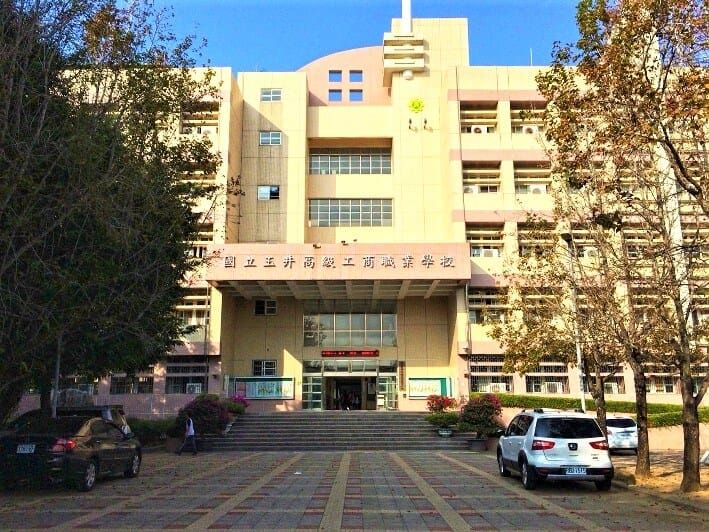
National Yujing Senior Vocational Industrial and Commercial School was founded in March 1939 (the 28th year of the Republic of China) as a two-year school, originally named 'Zhuangli Yujing Practical Training Institute'. After years of restructuring, it was renamed to its current name, 'National Yujing Senior Vocational Industrial and Commercial School', in February 2000 (the 89th year of the Republic of China). In August 2001 (the 90th year of the Republic of China), a comprehensive high school was established. The school has a total of 42 classes, including the comprehensive high school (comprising Academic Natural Science, Academic Social Science, Food and Beverage Services, Business Management, Electronic Information, and Advertising Design programs), vocational high school (comprising Electronics, Electrical Engineering, Chemical Engineering, and Data Processing departments), and practical skills programs (comprising Food and Beverage Technology, Advertising Technology, Audio-Visual Electronics Repair Technology, Business Information, and Plumbing and Electrical Technology departments), with a student population of over 800.
The school's requirements for establishing the IP AV PA system this time are as follows:
Establish an e-multimedia PA system, through which various multimedia messages (digital teaching materials, live event video files, text, images, audio/video, etc.) can be broadcast to classes.
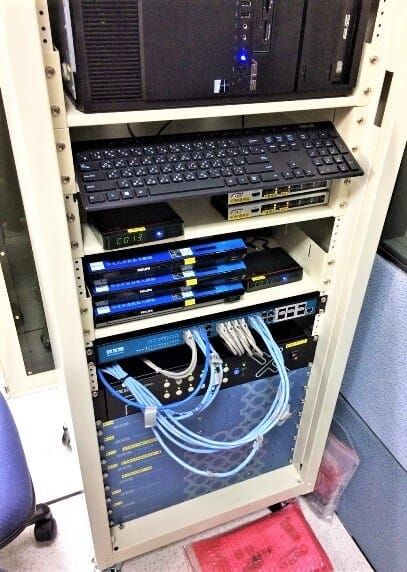
Phase 1 establishes 1 control end and 36 receiving ends (including 33 classrooms and 3 offices); Phase 2 adds 16 receiving ends (including 9 classrooms and 7 offices).
System management and usage can be executed by connecting to the system via a PC, featuring comprehensive permission management.
Group (grade, class) settings can be configured, and multiple channels can be used to present various multimedia information (graphic broadcasting, English listening, live event streaming, videos, TV news, etc.). It can also control various functions of the receiving TV (including power, channel, signal source, and volume) in a scheduled or real-time manner.
The AV signals at both the transmitter and receiver ends can reach the HD 1080P standard.
Established 2 live streaming locations at the school's activity center and B1 lecture hall.
While BXB
ICP-5100 Multimedia Publishing System
All can meet the above requirements. The system adopts a single network cable architecture for video, audio, and control signals, utilizing standard TCP/IP for network transmission so that audio/video and control signals do not interfere with each other. This system can control up to 700 single zones + 70 group zones. Users can customize and arrange a simulated graphical control interface of the venue based on the actual layout of the zones. Through this system, multiple functions can be executed, including audio broadcasting, audio/video broadcasting, silent broadcasting, TTS (Text-to-Speech) broadcasting, scheduled broadcasting, live streaming, telephone/mobile app broadcasting, remote device energy management, disaster alarm push notifications, and emergency SOS two-way intercom broadcasting. It offers immense integration, providing users with more flexible operations and settings. Furthermore, the automated scheduled playback allows the system to play automatically on time without manual control, saving human resources.
In this project, 42 classrooms and 10 offices are equipped with BXB ICP-5011 PA decoders, paired with BXB WS-665 wall-mount speakers, BXB ICP-TV1 TV controllers, and InFocus TVs. Graphical control software is used to manage the playback equipment in classrooms. Based on permission settings, class groups can be defined to configure audio-visual teaching content playback, computer multimedia information, English listening tests, plain text announcements, and real-time text-to-speech (TTS) notifications as teaching aids. This enhances the convenience of broadcasting audio-visual teaching programs on campus, makes various policy promotions more efficient, integrates educational resources, and boosts students' interest in learning. In addition, the main control end can set groups (by grade or class) to turn on classroom TVs in a scheduled or real-time manner for multiple channels (DVD, digital audio-visual multimedia information, silent broadcast electronic bulletin board messages) and receive high-definition HD 1080P audio-visual channels set by the main control end. The power, channel, signal source, and volume of the classroom LCD TVs are all controlled by the main control end. The system features remote network connection detection, displaying online and offline connection statuses. When a classroom LCD TV loses power or a classroom digital HD audio-visual player is abnormal, it can report back to the main control computer, making it easy to troubleshoot the cause of the failure.
The school has highly praised this system since its installation in June 2017, with feedback as follows:
1) In the past, when there was only one audio broadcasting system, if there were many locations to broadcast to, they would often compete for usage. Since having this IP broadcasting system, it provides an additional broadcasting channel. Now with two broadcasting systems running in parallel, a portion of the traffic can be distributed to the IP broadcasting system, which has yielded great results.
2) This IP public address system provides networked synchronous management for multiple computer PA hosts. Sub-control station PA systems can be added at system network nodes, allowing audio and video broadcasting to classrooms or offices from either the main or sub-control stations, offering greater flexibility. In the past, to play English listening tests, one had to walk to the main control station. Now, as long as the sub-control station graphical control software is installed at one's own desk, it can be played immediately, which is extremely fast and convenient.
Here, we would like to thank National Yujing Senior Industrial and Commercial Vocational School in Tainan for their support and appreciation of BXB ICP-5100. "Innovative Products, Customer First" is BXB's service philosophy. We will work harder to provide customers with the most professional services and technologies. BXB is your best choice and partner for public address systems.
(BXB Electronics provides comprehensive smart classroom solutions for schools. If you are interested, please feel free to contact us!)